
La Belle Époque to the Mid-Century Powerhouse
The desire to decorate and adorn the body reaches back millennia. Not surprisingly then, tracking down the perfect jewel is a natural preoccupation, emotionally charged at every step.
Shop a century of style with us, from the divinely decadent Belle Epoque to the logo mania of the Noughties, Jennifer’s individually sourced and curated jewel box has it all. Read on to find your favourite era, pick your next style hero founded on Jennifer’s decades of experience and eye for a timeless gem!
Read on for a Century of Style: Part I…

La Belle Epoque, 1890s -1910s
Look for: Chokers and elaborate collars, bows and swag motifs, layers of pearls, enamels.
La Belle Époque, or ‘the beautiful era’ straddled the end of 19th and early 20th Century; a period of peace and prosperity which enjoyed the richness of three distinct art movements. The era gave rise to some of Europe’s most elegant, flamboyant, and exquisitely decorative jewellery and many design elements that have effortlessly transcended a century. Think opals and moonstones, natural themes, depiction of la femme fatale, Bijouterie, magical enamelling, swags designs, garlands of foliate motifs, lace and bows designs, ethereal plique-à-jour and the rise of artfully worked semi-precious stones. Layers and layers of pearls worn at choker to opera length, drawing dramatic attention to the décolletage, became de-rigueur for the wealthy socialite.
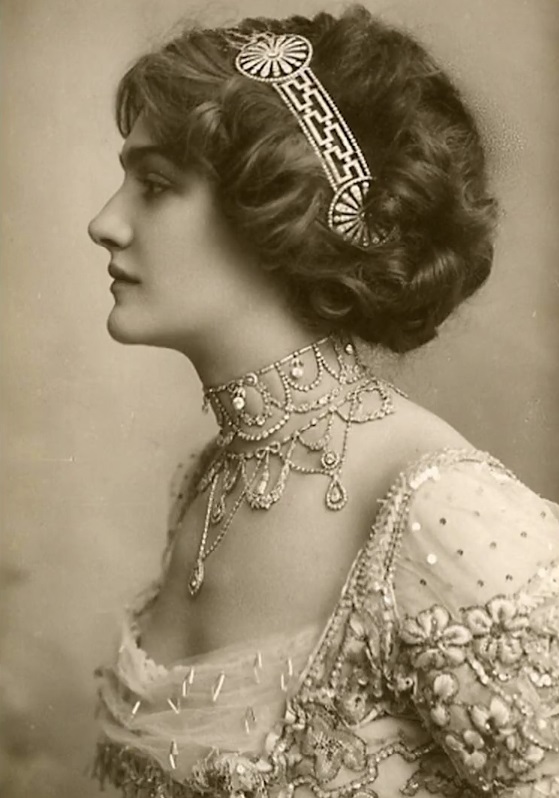
Miss Lily Elsie, Actor, 1900s La Belle Epoque.
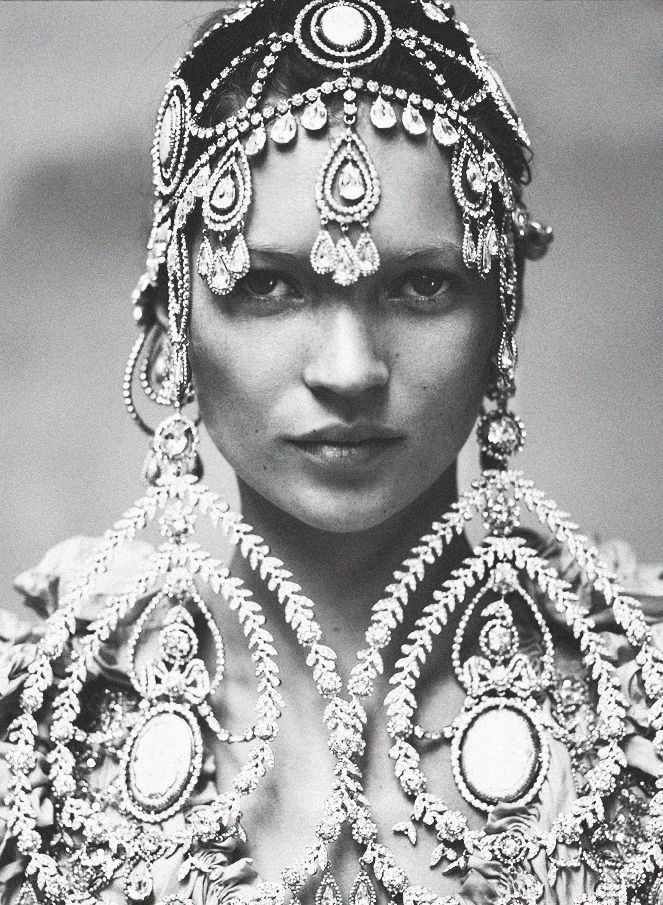


The Roaring Twenties and the Art Deco period 1920s – 1930s
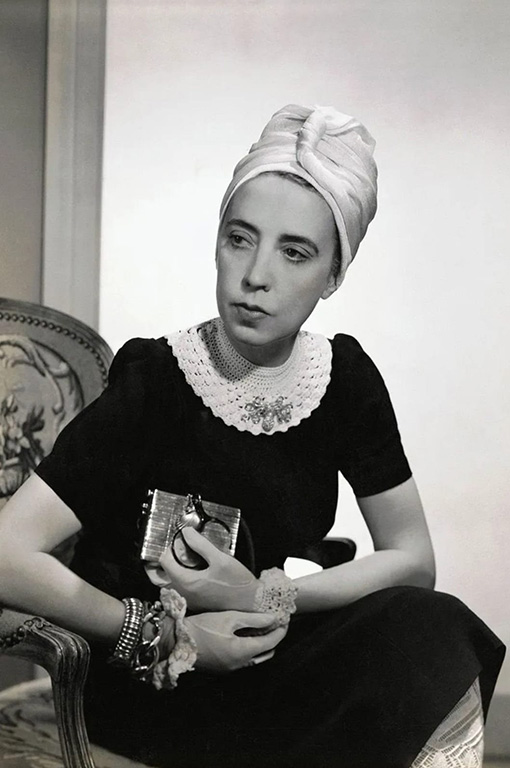
Elsa Schiaparelli, a major force in shaping the style of 20th Century Costume Jewellery.
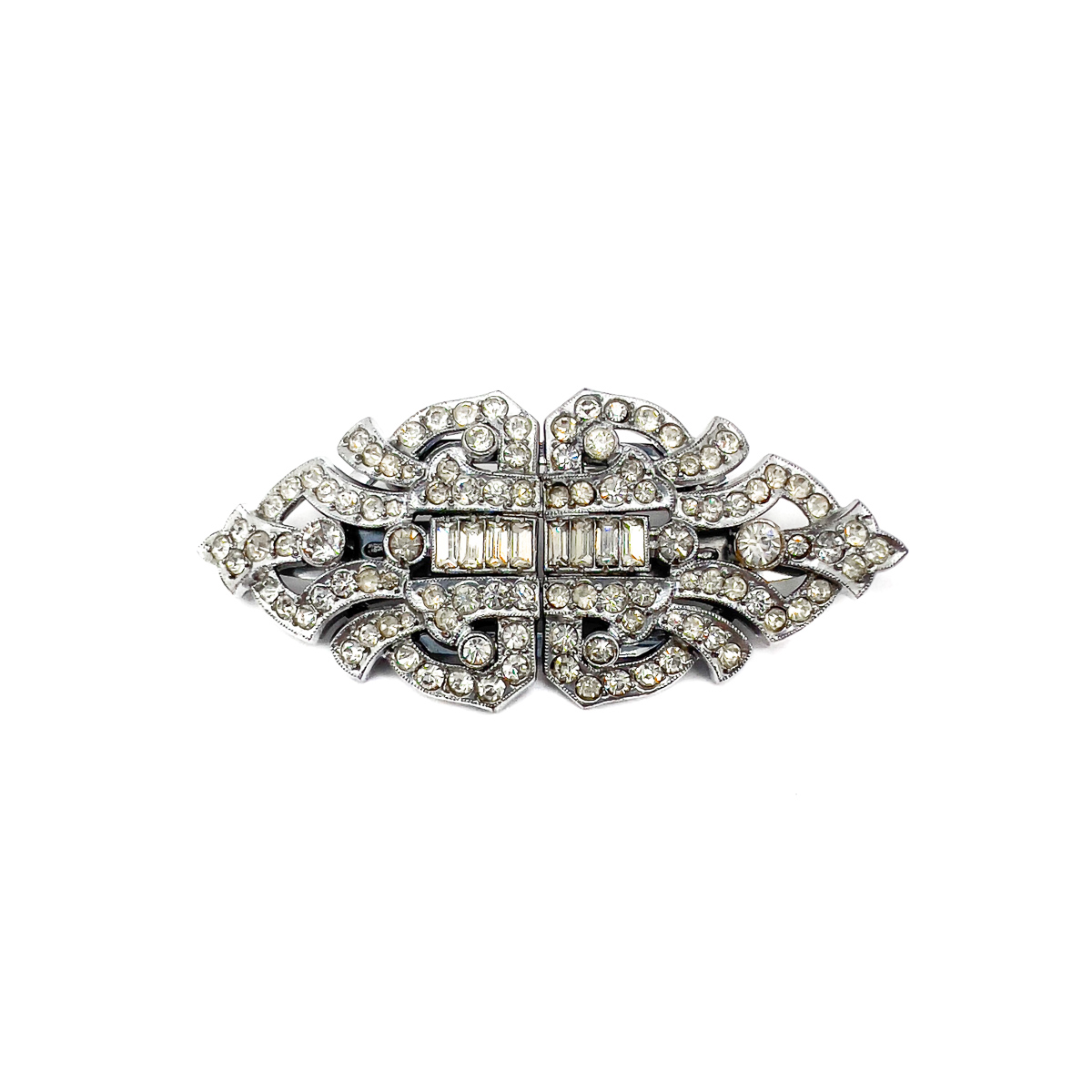
We should however acknowledge their part in triggering a costume jewellery revolution which we all cherish, covet and enjoy today, more than 100 years on. Hollywood’s ‘Silver Screen’ influence on the fashion of the 1930s provided respite and creating an appetite for glamour in the troubled times of the economic downturn and the Great Depression. For sure this was the arrival of the Celebrity endorsement with the screen stars every movement captured in magazines. The power of the motion picture was capable of radically rewriting the image of a jewel or brand changing the landscape of jewellery marketing forever.


The Mid-Century Powerhouse, 1940s & 50s
Look for: Hollywood Glamour, Rare couture investments, Parures.
Paris rapidly lost leadership in the fashion world during the Second World War and for the first-time in the 20th Century costume jewellery centered on America.?
Despite severe restrictions on materials, America’s costume jewellers thrived despite it all providing a much needed boost for feminine morale and without European trends to influence their design, American jewellers began to produce the first all American look. Hollywood and Broadway were booming providing escape from everyday worries. This glamorous style was epitomised by the likes of Rita Hayworth, Lana Turner, Veronica Lake and Lauren Bacall and came to symbolise the modern American woman.

After the War the world craved glamour and glitz. Hollywood continued to inspire a demand for gorgeous gowns and accompanying large, glitzy costume jewellery and fed a desire for an exciting social life. Europe was desperate to leave behind the austere War years and Paris entered a new and exciting era of couture with some of the greatest names entering the scene. Most notably Dior.
Enter Maison Dior
Parisian couturier Christian Dior, opened his eponymous house at 30 Avenue Montaigne Paris. Overnight Christian Dior revived and transformed Parisian Haute Couture with his 1947 ‘Corolle’ Line. A line famously coined by Harper’s Bazaar’s, Carmel Snow, as the ‘New Look’. Paris was back as the fashion industry’s world leader and undoubtedly Christian Dior the most influential House of the 50s.
Dior’s jewels were sumptuous yet elegant and Christian Dior himself deemed costume jewellery vital to the overall look of his collections.
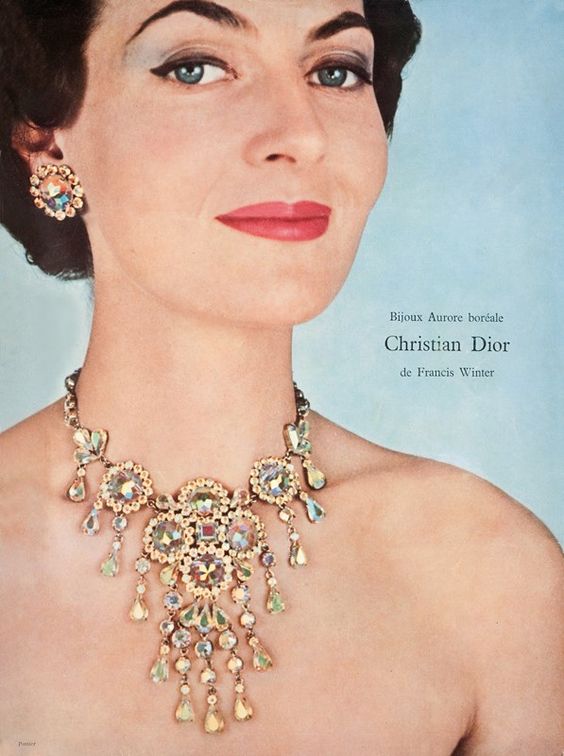
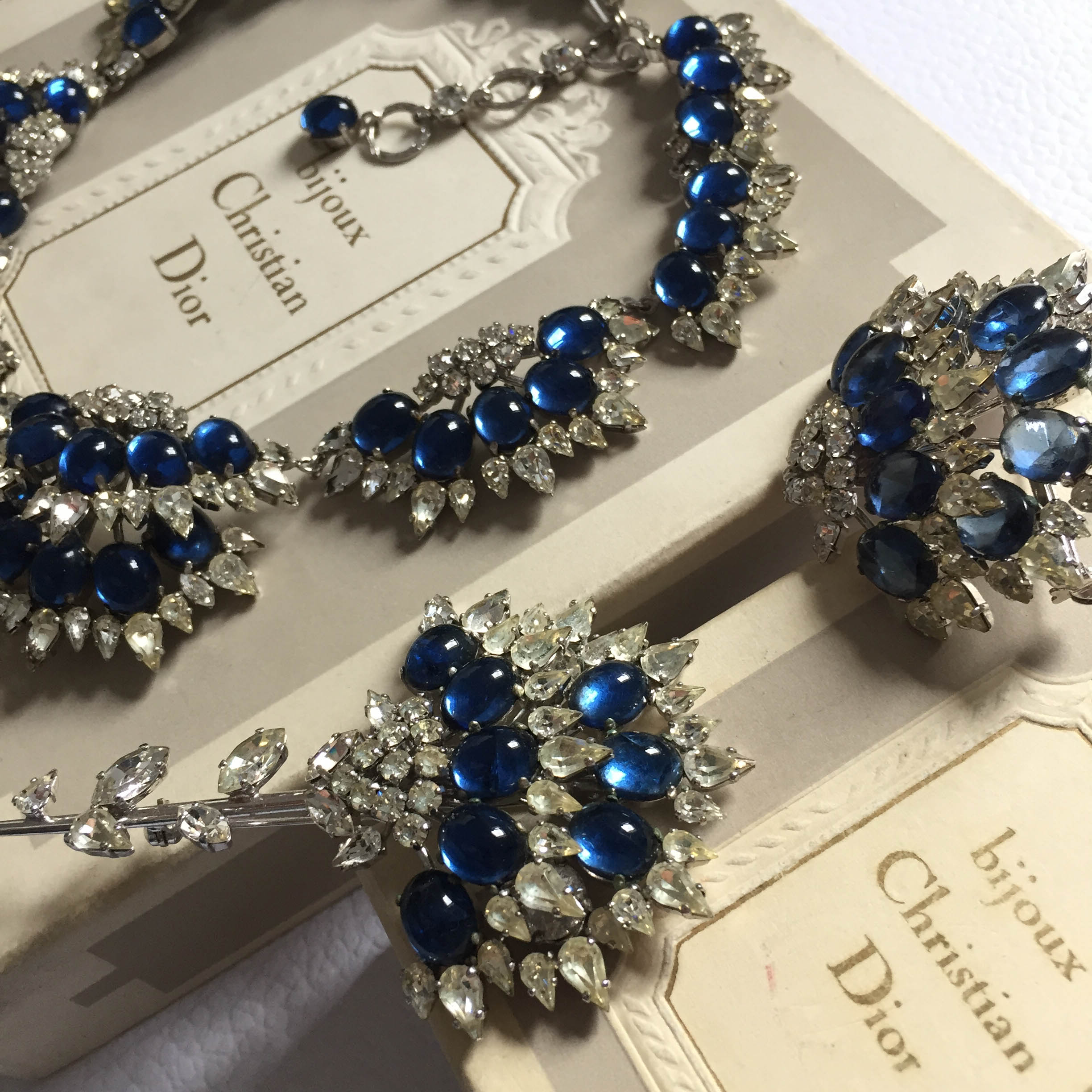
Christian Dior Parure.
Dior’s design vision incorporated dressing his client’s ‘Top to Toe’ including hats, gloves, shoes, hosiery, perfume and of course costume jewellery. The fact that Dior’s customers were typically the social elite, aristocracy, Royalty, each with fine jewel collections aplenty, the enormous success of Dior’s costume jewellery is even more remarkable. A key measure of just how magnificent and relevant his creations were. Dior established ‘costume jewellery’ or Bijoux not only as an essential element of a woman’s look, but a feverishly desired one and one that here to stay – an intrinsic and often central part of fashion collections, at every level, to this day.
Dior scoured the world for the best jewellery designers and materials. He drew upon centuries of styles to influence and create outstanding designs for his costume jewellery that proved totally unique in their composition and look. From a garland to Victorian, from neoclassical to romantic, from mythology to innovation the invention was seemingly endless. His invention of the ‘Aurora Borealis’ crystal stone with Daniel Swarovski in the mid 1950s, incorporated a micro thin veil of vaporised blue metal so the stone would give out a myriad of iridescent colours from just a single stone. Remarkable vision and creativity.
In mastering this glorious area of his work, Dior partnered with some of the world’s finest artisans and jewellery makers who should be equally acknowledged. These included Daniel Swarovski, London’s Mitchel Maer, Germany’s Henkel & Grosse and Kramer of NYC. Closer to home he worked alongside famous Parisian ateliers, some of the most notable; Maison Goossens, Maison Gripoix, Francis Winter, Roger Jean-Pierre and Roger Scemama. Francis Winter perhaps the most outstanding parurier of them all for the House.
Chanel Returns
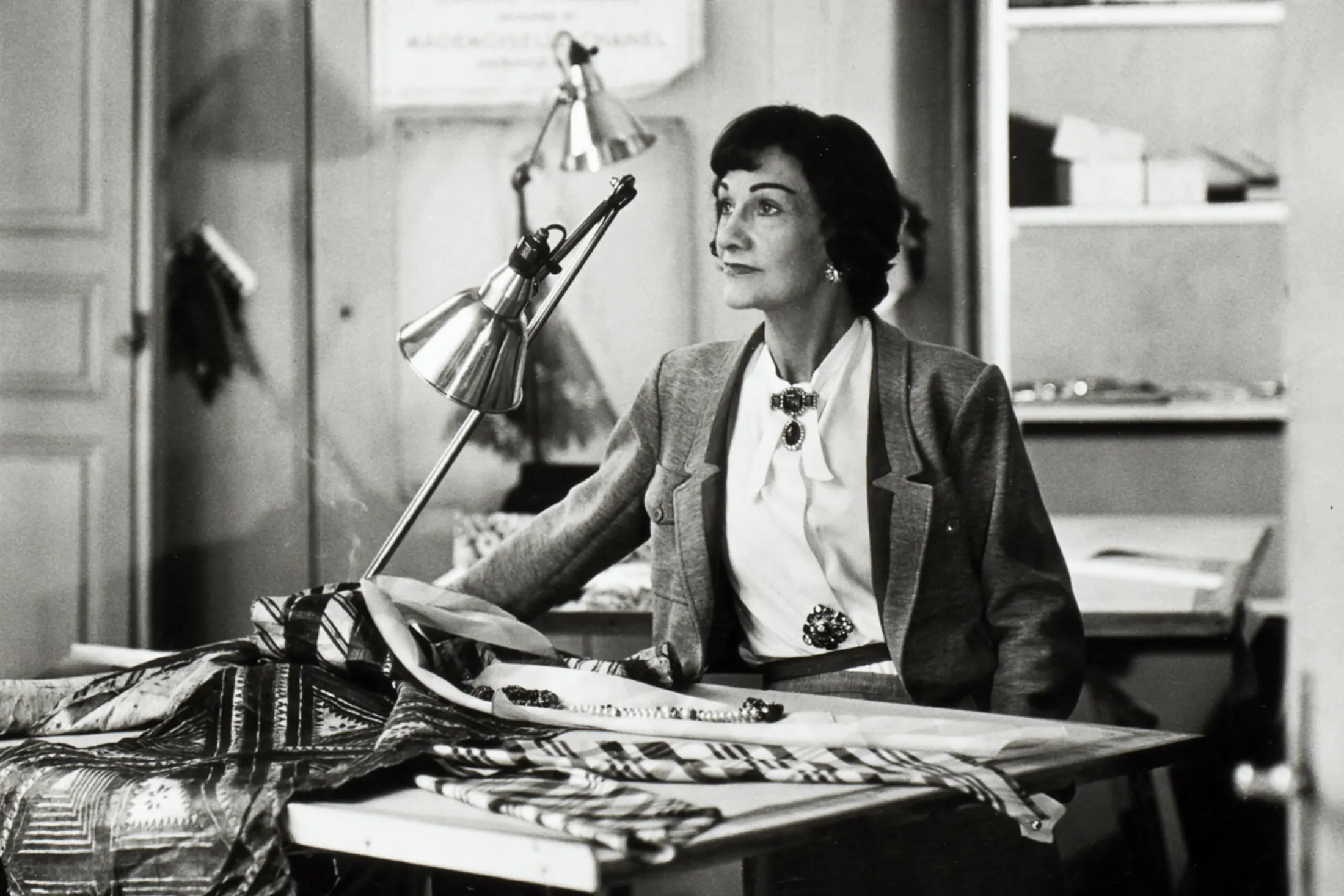
To Paris’s surprise, Coco Chanel ended her self-imposed exile in 1954 returning to her House. Some say in response to the male dominated couture scene (Dior, Givenchy, YSL) and their opposing effect on couture for the modern independent woman.
Chanel paired her classic suits with clusters of sautoirs, gilded chains interspersed with imitations pearls, coloured crystals and incredible Byzantine glass paste necklaces and completed the look with neat ‘nest’ earrings with a central pearl (a now timeless and Chanel classic jewel). She continued to create jewellery with Suzanne Gripoix of Maison Gripoix and notably founded a new and exciting partnership with the Maison Goossens, specifically with Robert Goossens. Their incredibly successful and symbiotic relationship resulting in Goossens Chanel jewels being equally as coveted and revered as the Maison Gripoix’s.
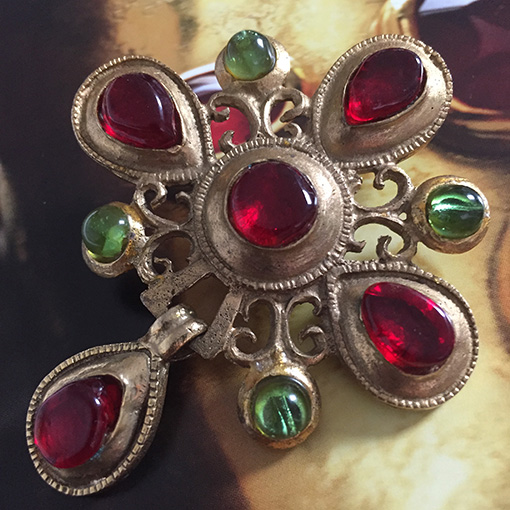
The work of Robert Goossens.
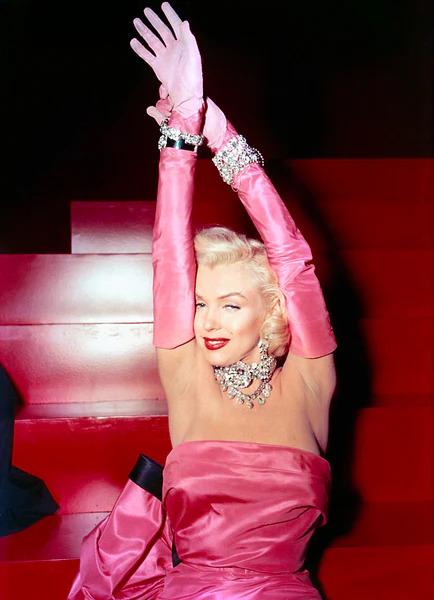
Celebrity Endorsement
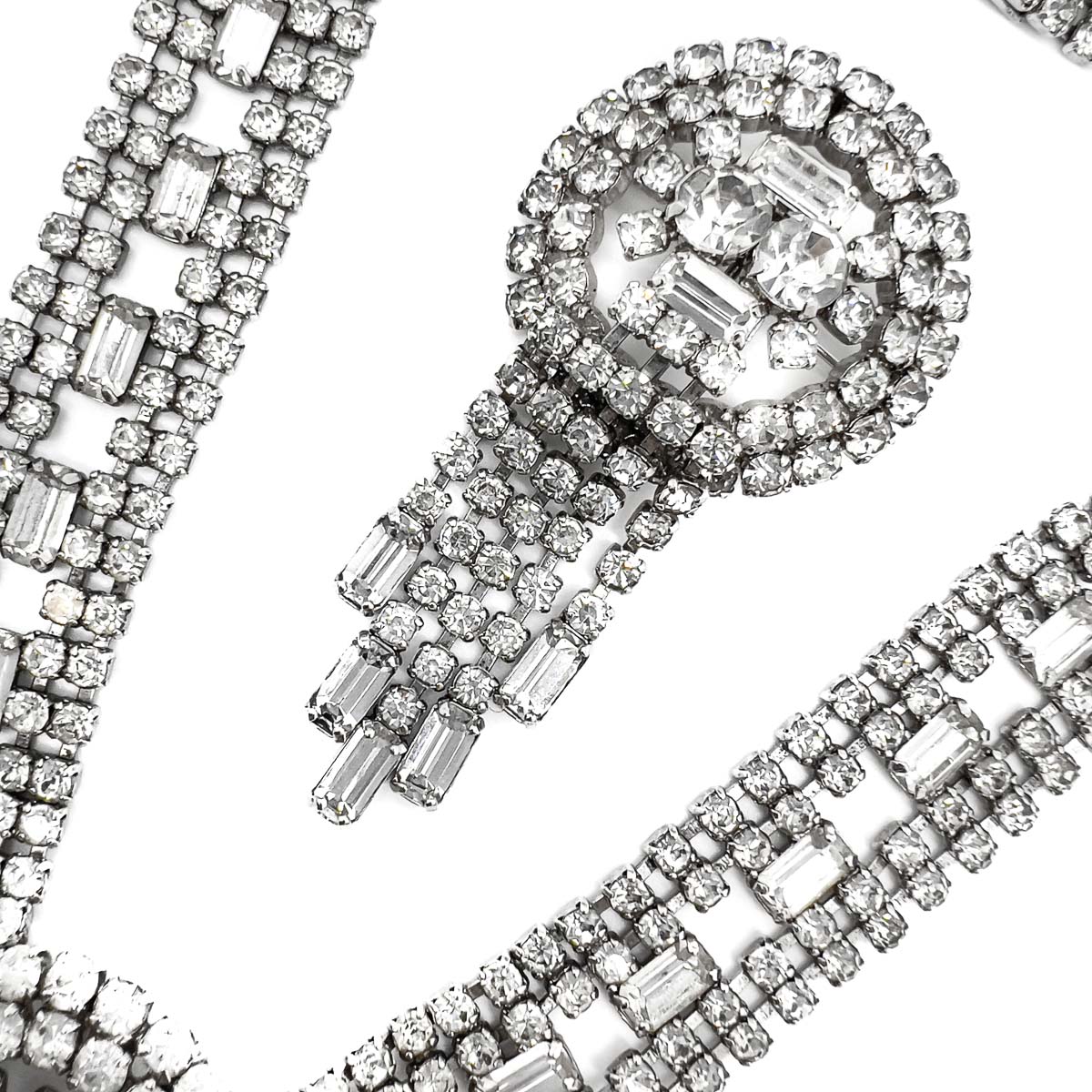
Royalty, VIPs and celebrity were wearing and endorsing costume jewellery in the jewellery world. Icons such as Elizabeth Taylor, Wallace Simpson, Diana Vreeland, dispelling the myth of vulgarity or imitations once and for all. Mamie Eisenhower donned a Trifari imitation pearl and rhinestone parure at the 1953 & 57 Inaugural Balls; perhaps one of the most significant events for American Costume Jewellery endorsement. Ironically, in the movie, Gentlemen Prefer Blondes, Marilyn Monroe sang ‘Diamonds are a girl’s best friend’ wearing a rhinestone and rhodium plated parure, accentuating her incredible beauty.
In addition to the names that created a bedrock for the fashion jewellery industry during the 1920s-40s (think Marcel Boucher, Trifari, Hattie Carnegie, Rousselet, Sandor, Joseff, Eisenberg, Coro, Nettie Rosenstein, Miriam Haskell, Ciner, Hobe and not least Coco Chanel and Elsa Schiaparelli), significant numbers of new American companies sprung up during the mid-century to meet the exponential demand adding to the feverish desire to make a fashion statement with a jewel. These included America’s Kenneth Jay Lane, Kramer NYC, Weiss, DeLizza & Elster, Pennino, Mazer, Eugene, HAR, Warner, VOGUE, Vendome and many many more.



We hope you’ve enjoyed the first part of a ‘Century of Style’. Return in June for the second and meanwhile enjoy perusing the collections. Like some help ? Don’t hesitate to get in touch.
