
If there’s one necklace that truly embodies effortless elegance, it’s the rivière. This style has been around for centuries, yet it never feels outdated—whether it’s a sparkling 1950s rhinestone version or an 18th-century Georgian paste piece.
Having spent more than 40 years in the world of antique and vintage jewellery, I’ve handled countless rivières, from delicate Art Deco paste necklaces to bold mid-century costume jewellery designs by Christian Dior. And put simply, there’s nothing quite like slipping one around your neck. Whether you wear it with a crisp white shirt or a cocktail dress, a rivière always makes a statement.
But where did this style originate, and why has it endured for over 300 years? Let’s take a look at the fascinating history of the rivière necklace and how it became an essential part of the jewellery world, from fine jewels to costume jewellery.
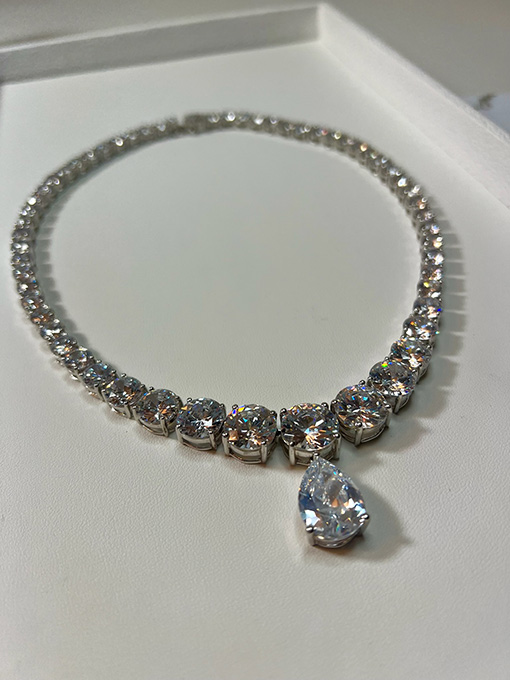
Georgian Beginnings: The Birth of the Rivière
Early rivières were often set in closed-back silver or gold to enhance their brilliance. But what many people don’t realise is that paste, a high-quality glass imitation, was also hugely popular at this time. Paste jewellery was crafted with the same skill and artistry as fine jewellery, and in some cases, it appeared to sparkle perhaps even more beautifully than real diamonds… Innovations of the time included ‘black dot’ paste where a small black dot was painted on the bottom, or culet, of the glass stone creating an illusion of depth to emulate a real diamond. Also foiling – a thin sheet of metal placed behind the stone – was a signature style of the Georgian era where the foil reflected light back into the stone, making it appear more brilliant.
How the Rivière Evolved Through the Ages
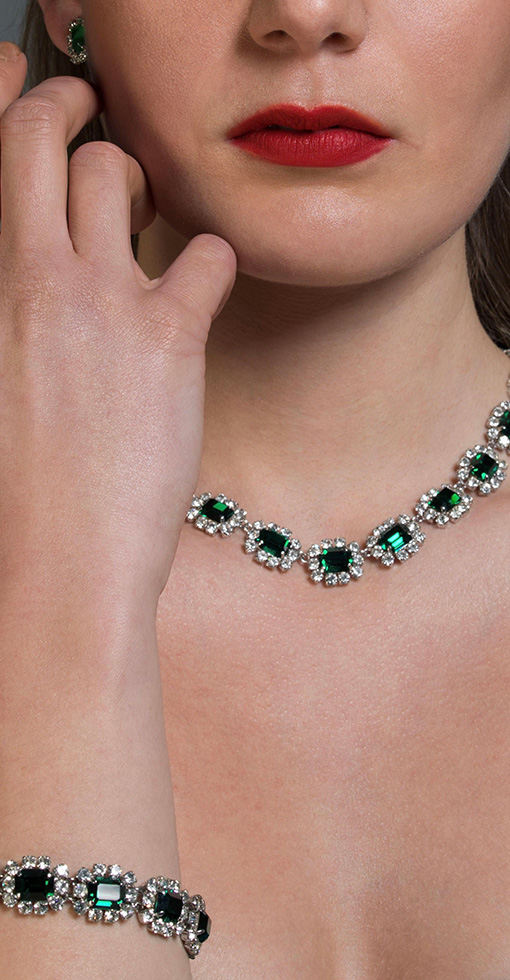
During the Victorian Era settings became more ornate, often crafted in gold with deeply coloured gemstones like garnets and amethyst. The Edwardian Era introduced platinum settings making rivières feel lighter and more delicate – often with diamonds and pearls creating an ethereal effect. During the Art Deco Period clean lines and geometric cuts took over, with stunning paste and rhinestone rivières often worn at choker length designed to complement the long and lavish sautoirs and bold fashions of the 1920s. Hollywood’s ‘Golden Age’ during the mid-century saw costume jewellery companies such as Weiss, Hobe, Trifari, Coro, and Eisenberg create dazzling rhinestone rivières that rivalled fine diamond versions.
This last era is one I particularly love. Vintage costume jewellery makers went all out during the mid-century, crafting multi-strand rhinestone rivières, colourful Swarovski crystal versions, and dazzling baguette-cut designs that still turn heads today. France and Austria creating some of the most coveted costume jewellery interpretations and often for the world’s most famous Couture houses in Paris.
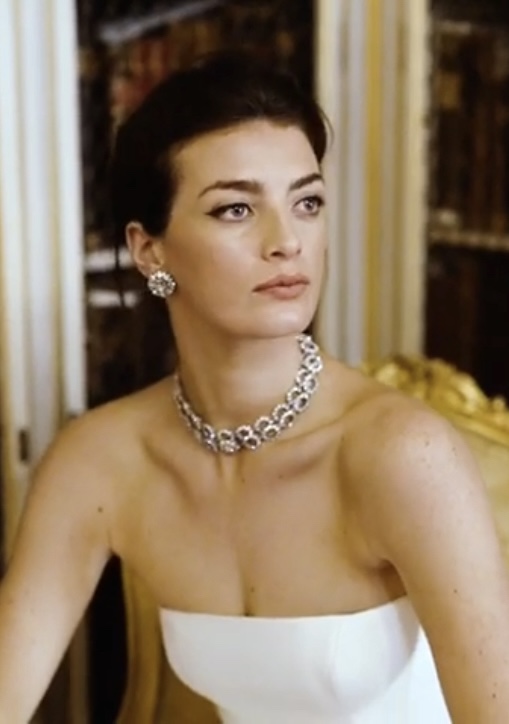
Iconic Rivière Necklaces & Their Famous Owners
Marie Antoinette’s infamous diamond necklaces – believed to have been dismantled during the revolution were Georgian-era masterpieces. Jewels that have connections to the Queen tend to out-perform all others with pieces selling at Sotheby’s in 2018 and more recently in 2024 with a $4.8 million hammer price.
The Napoleonic Amethyst Rivière – Once owned by Empress Joséphine, this heart-stopping show of amethyst is on display in Sweden’s Royal Treasury.
The Sutherland Diamond Rivière – Part of the Victoria & Albert Museum’s collection, this piece has been worn at multiple coronations and it is remarkable that this piece has survived being broken up and recut. The V&A historical account is a wonderful read.
The UK’s Queen Mary had a 100-carat collet set diamond rivière made around 1900 epitomising the style of the time. Inherited by Princess Margaret and latterly her daughter Lady Sarah Chatto, the rivière escaped the fate of being sold with Margaret’s collection.
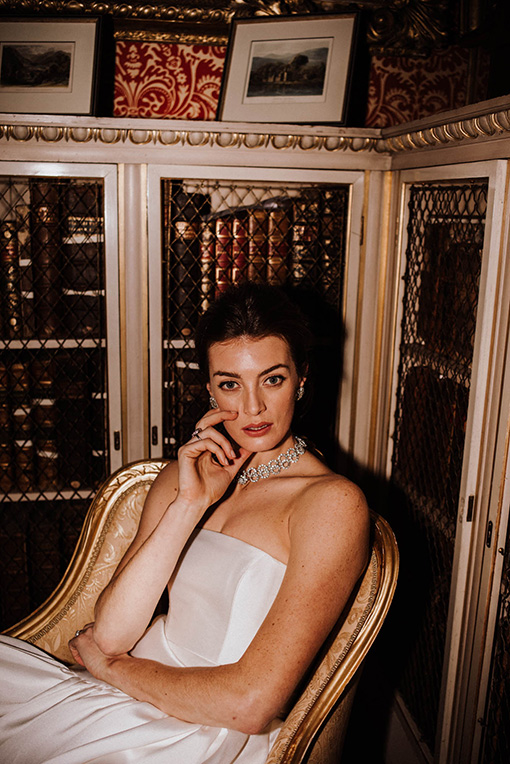
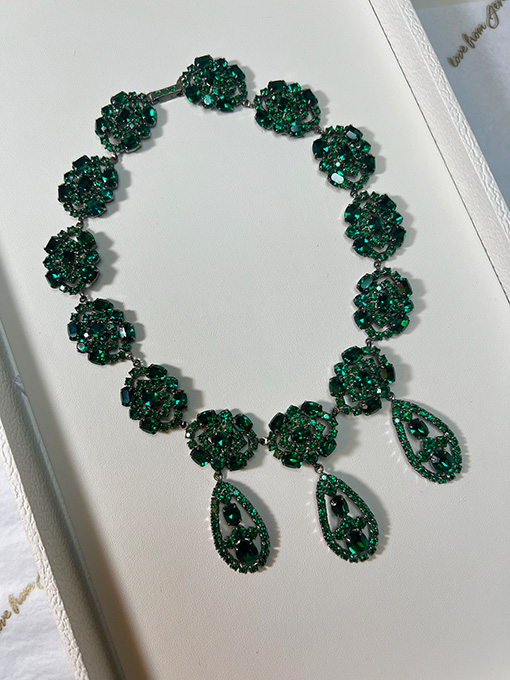
Why Vintage Costume Jewellery Rivières Are So Coveted
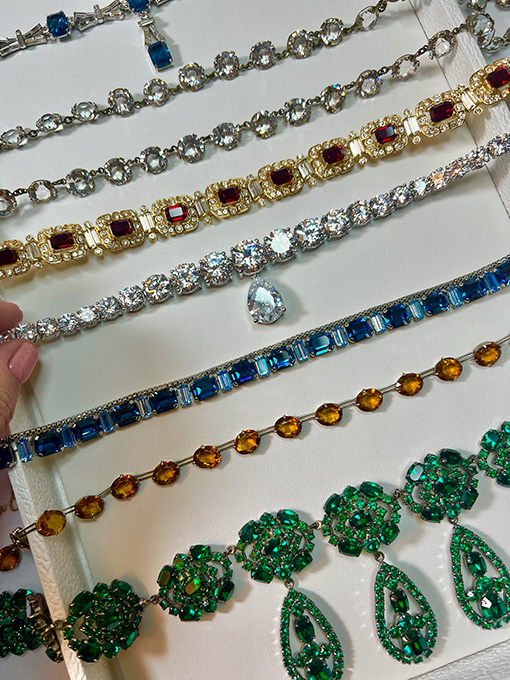
One of the reasons I love vintage costume jewellery rivières is their incredible craftsmanship and creativity. Brands like Christian Dior, Trifari, Weiss, Eisenberg, Yves Saint Laurent to name a few, didn’t just copy fine jewellery—they innovated, using: foiled-back glass stones for maximum brilliance, unique colour combinations, from deep sapphire blues to vibrant emerald greens, hand-set rhinestones in intricate metalwork and even lucite and resin versions for a fun, playful take on the style.
These pieces weren’t just affordable, more impactful alternatives to fine jewellery—they were works of art in their own right. Today, they remain highly collectible, with some rare designer rivières commanding serious attention.
How to Choose & Style a Vintage Costume Rivière
- Look for quality settings. Hand-set stones, prong settings, and signed designer pieces are always a good investment. Check links – ensuring you decline jewels with fatigued or broken links.
- Check for missing stones. Vintage rhinestone rivières can be restored, but finding original replacement stones, especially fancy cut or unusual colours, can be tricky.
- Choose a length that suits your style. A short choker-length rivière is great for layering, while a longer one feels effortlessly elegant and may provide more styling options.
- Pair it with modern fashion. A dazzling 1950s rhinestone rivière looks amazing with a simple t-shirt and jeans—it’s the perfect mix of vintage and contemporary.
If you love the idea of owning a vintage costume jewellery rivière, I’ve personally curated a small selection of beautiful Art Deco, mid-century, and 1980s statement pieces. You can explore the collection or get in touch if you’d appreciate some assistance.
Why the Rivière Will Always Be in Style
• It’s versatile – whether fine or costume, a rivière goes with everything.
• It’s timeless – trends come and go, but a classic line of gemstones or rhinestones never feels outdated.
• It makes a statement – even a simple dress looks elevated with a stunning rivière.
You need only glance at today’s A-list to confirm its staying power. Layered or alone Angelina Jolie, Jennifer Lawrence, Zoe Kravitz and Dakota Johnson prove the point.
Because some designs don’t just last—they get better with time.
